interview

DoggySnaps.com: the tail ‘tagging’ the dog
March 1st, 2007

I only recently stumbled across the Dog Trust’s photo-sharing community, DoggySnaps.com. I’m not a dog owner, and frankly have no particular affinity with dogs, but the fabulous design, adoption of features such as tagging, and impressive attention to detail all made an instant impact on me.

I encouraged Tim Malbon, Creative Director at Interesource, to share a few juicy morsels from the website’s first six months…

The Dogs Trust seem to have embraced user-generated content with gusto. Has this been an easy journey?

We have a really close relationship with Dogs Trust. We first suggested the idea at the end of 2005 and while it took some time for the charity to come round (the growth of services like Flickr and Photobucket, and social networking websites like MySpace helped here), the people there embraced our vision pretty quickly. It’s brilliant working with people who ‘get it’.

Best in Show - DoggySnaps.com

It was also an exciting way for us to work: generating an idea and then selling it to a client - instead of waiting for clients to ask us to solve their problems. You can only work like this when there’s a lot of trust and respect.

Is DoggySnaps.com the UK’s first charity photo-sharing site of its kind? Did you ever consider a service like Flickr?

Yes, and yes. What we initially thought though, was that there is an opportunity to generate some revenue from crowd-sourcing dog photos.

Consider there are millions of dog owners who are taking billions of photos of their dogs, but have nowhere to put them. We thought these photos would start a ‘conversation’ about how much they love dogs: simple as that. That’s what we saw happening - particularly on Flickr and Dogster.

What we added was the idea that you can create value from this by asking the user to donate the rights to their images in kind. More about that later.

Could you give some measures of the success of DoggySnaps?

The success of DoggySnaps has been overwhelming. With practically no PR or marketing, and from a standing start in October 2006, we now have over 40,000 photos of dogs and this is rising steadily everyday. The website received 164,000 visits in January from a truly global audience. The average visit lasts 16 minutes. We have an active community who are emotionally engaged and very responsive to the website, newcomers and new features, which is fantastic for such a young site.

What has the charity learned about engaging with dog lovers in this entertaining way, compared to more traditional forms of supporter communications?

The most important thing - I think - is that the charity gets better results when it engages supporters on their terms, instead of trying to ‘interrupt’ them in order to ask for donations.

DoggySnaps is now a part of their lives, not an interruption. I think we’ve only just started to explore ways to translate this into donations.

What are your plans for enhancing the service… and how much is this informed by user feedback?

A large proportion of feedback from users is incorporated into new developments - ‘emoticons’ in the new forums, private and public messaging in ‘kennels’, information about the actual owner… and a number of forthcoming projects have all been driven as a direct response from feedback from the community.

To be honest, these guys are on the site 24/7 so it makes sense to listen to them, as they work with the DoggySnaps front end the most.

We are also planning to launch a beta community that will allow us to engage the most active users specifically to test new ideas and features.

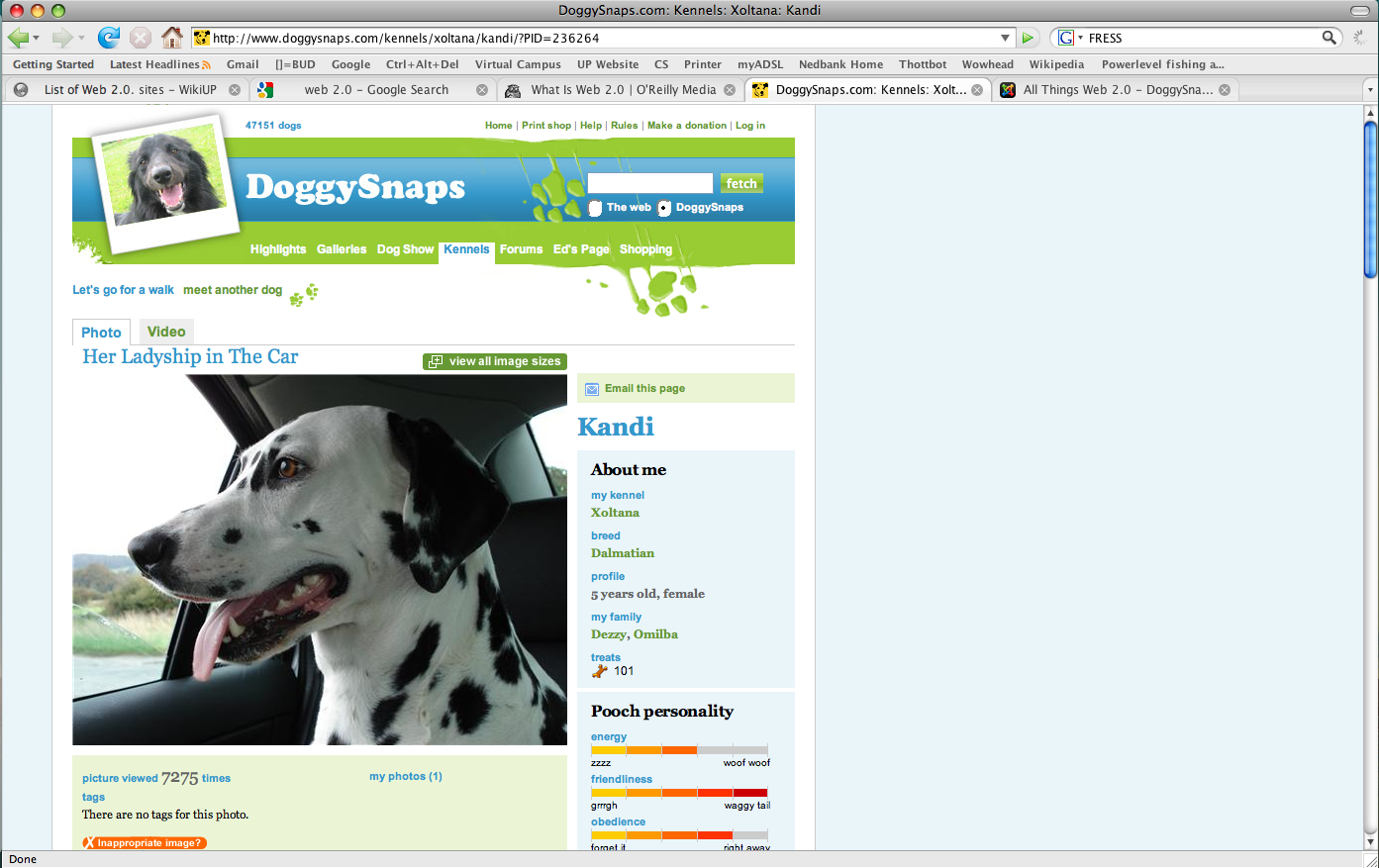
Dog page on DoggySnaps.comHave you identified how the user-generated photo library might generate donations to support the work of the Dog’s Trust?

The Dogs Trust developed the website for the primary purpose of raising money and awareness of the charity, its dogs and the message. It can monetise the user-generated content by creating a rights-managed photo-library… selling images to advertisers, brands and publishers. If you think about it, dogs are one of the most popular themes in advertising and marketing.

There are lots of other ways, too - e.g. premium ‘treats’ and on-demand printing may turn out to be the most effective, but there are others: an online dog show… pulling in some of the Dogs Trust website… Who knows? There’s so much to try. We’re also experimenting with advertising.

How is the service managed? Is there a full-time Community Manager?

We have two editors; one who deals mainly with website maintenance issues, and another who responds to emails and requests. They work to make sure there is a consistent service.

What’s your favourite feature on the site?

I personally love giving treats - I think it has so much more potential. People really feel like they are contributing and involved with the site, as they all affect the stats. Also looking forward to video.

I notice Clarissa Baldwin has a blog. Did she take much convincing - or coaching - to start blogging?

Clarissa is so passionate about her dedication to dogs and verbalising this, I’m surprised she didn’t request a blog sooner!

Have a good sniff around DoggySnaps.com yourself… and check out Clarissa’s blog, too.

Technorati doggysnaps, dogs trust, net2, nptech, tagging, user generated content

An interview with the Widget King

February 7th, 2007

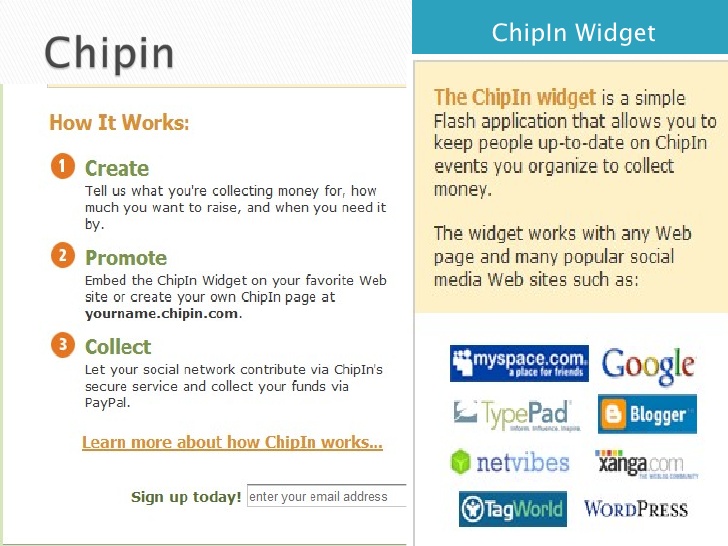
Last year, Hawaii-based ChipIn launched its “social ecommerce” service designed to help individuals connect with people in their social network for collection of money for a personal cause, to purchase a gift, or for community fundraising.

ChipIn widgetIn recent months, the business has morphed into a “distributed fundraising widget management company”. Shel Israel blogged about this following a breakfast meeting he had with Carnet Williams, CEO at ChipIn, last December.

Now, if you want to find out how the ChipIn widget works, then you should read Beth Kanter’s case study, who incidentally interviewed Carnet in his pre-ChipIn days.

I think that distributed widget fundraising is a hugely important development and is set to sky-rocket this year… something I asked Carnet.

Do you agree that 2007 will be the Year of the Widget?

Yes! But I have a caveat on the term ‘widget’. I think in 2007 we will see a trend moving away from pure consumer-based widgets that act more like banner ads, and see the rise of the “smart” widgets - actual mini-applications that are embedded on both websites and desktops.
We are moving towards a more business-oriented rationale for widgets. Some good examples are the box.net widget to access and upload your files. It also plays mp3’s. This is a widget that serves a clear business purpose. That is where we wanted to position ChipIn - as a transactional widget that helps collect money. We will soon move beyond just tracking the collection of money, and onto tracking many different actions.

How do widgets offer a brand-building opportunity for not-for-profits?

When we think of widgets, we should be thinking of online branding and advocacy. It is not just the widget or the donations that not-for-profits should be seeking, but building a network of advocates that will carry a particular message. If the message is compelling, the donations will follow. Not-for-profits have an amazing ability to harness the power of their constituents’ social network through well-designed widgets that offer compelling value (content, actions, etc).

What is the blueprint for a successful widget strategy?

Just like selling your organisation’s mission, a widget strategy must start with a compelling message / reason to create a widget in the first place. It must cater to the stakeholder who is going to carry that widget around with them. It has to offer value in terms of changing content and help an organisation’s advocate make their case for support.

Definitely check out Beth Kanter’s Sharing Foundation case study, mentioned above [and listen to Nick Booth's podcast of Beth talking about her widget fundraising].

How do you measure the effectiveness of a widget?

We look at the number of widgets created, how many times they are viewed, and most importantly, we track the parent-child relationship between widgets. This allows us to track the word-of-mouth impact a widget is having, and the best advocates at spreading the message.

Can you identify some successful distributed fundraising activities and blog-raising campaigns?

DonorsChoose ran a great widget campaign last year to get bloggers to support school projects. I think they were one of the first not-for-profits to jump into this space themselves.

There are other campaigns running now, such as Network for Good’s SixDegrees.org campaign.

What are the main barriers to the adoption and spread of widgets (e.g. those sites which operate as ‘walled gardens’)?

I think the main barrier is going to be a crowded space and widgets that do not provide tangible value. For example, widgets that are just fancy banner ads will get old and tired very quickly for users.

The web is now all about user-generated content and changing content. Widgets need to follow this trend and provide a robust and rich media channel between the organisation and their supporters.

The walled gardens of the larger social media sites (MySpace, TypePad) will be an issue for groups, but we [ChipIn] are working to provide an aggregated approach to this problem by working with the larger sites to allow our system to work across the board. Everyone is always holding their breath to see what MySpace is going to do… but the desktop widgets may take some pressure off.

What’s behind the repositioning of your product as a Widget Management System?

Very simple. We had so many clients asking us for the platform that it made sense for us to shift our business from a consumer-facing product, to a back-end widget platform. We designed our core system to integrate very easily with our clients’ payment systems.

So, we are poised to fundamentally change the way online fundraising and advocacy will work within social media. We want to go far beyond just fundraising and see that as measurable benefit of our system. We want to see ChipIn become an online organising tool unlike anything else seen before. You’ll see a totally new and revamped ChipIn in the next month or so!!

(Wow… is this something for Comic Relief to try, perhaps?)

Technorati carnet williams, chipin, distributed fundraising, nptech, social ecommerce, widgets

Bertie, Blogs and Breast Cancer Care

December 11th, 2006

I recently conducted an email interview with Bertie Bosrédon, Head of New Media at Breast Cancer Care. Bertie’s responses make for interesting reading and I’ll be picking up on a number of these themes in future posts. Is Bertie a buzz director, I wonder?

How do you see social media (e.g. blogs, flickr, social tagging) blending together to the benefit of charities?

MySpace, Flickr and YouTube (among others) will become increasingly important tools for charities in the next 6-12 months to connect with existing supporters and reach new audiences. This will make us work in a different way - publishing more content directly to those websites, instead of expecting visitors to visit our own site. There will be benefits, but it will also become more difficult to gauge effectiveness.Breast Cancer Care pin badge

Do you think large charities are making the most of the opportunities offered by these tools?

Large charities tend to go for bespoke solutions. For instance, I’ve been asked on many occasions to create photo galleries. I am convinced it is more effective - and obviously cheaper, to set up a group on Flickr where everyone can upload their own photos and share their stories - real photos taken by real people. There is so much that can be done. Having said that, I have recently seen some powerful campaigning videos on YouTube, e.g. this video for the purple ribbon film festival in Taiwan to raise awareness of violence against women and this one produced by WWF Canada for their Save our Climate campaign.

What do you think are the main factors preventing charities from more readily adopting social media?

The first factor is budget. Many charities have redesigned their website in the last two years or so and it is difficult to justify investing in new systems.

I have been working in this sector since 2001 and I speak regularly with other web managers. I am always impressed by the level of creativity and the desire to do more… and almost always disappointed to hear repeated stories of lack of resources, the difficulty of getting internal buy-in and lack of recognition of in-house skills. Too often, web teams are not seen as experts but more as technical people whose job it is simply to “copy and paste” printed content onto a web page.

Have you found it challenging to persuade colleagues of the opportunities?

Not at all, and I feel very lucky for that! I was given free reign to set up my [New Media] department. Six months before I joined [in April 2006], the web team at Breast Cancer Care comprised two members of staff. I now have fourteen people in my department (6 percent of all staff). I have two staff working on content development, another two on technical development, and one on web analytics and traffic management. The rest of the team work on ‘interactive services’ - managing the forum, live chat and developing interactive tools for users. We are also recruiting a clinical nurse specialising in new media who will advise the content team on clinical issues.

Admittedly, the New Media department at Breast Cancer Care maybe unusual in our sector. But other staff also embrace the potential of new media, and so does the senior management team. Even the board of trustees express a keen interest.

We know how many people receive our publications, how many patients attend our courses, how many helpline calls we take and how many visits we receive to the website. The website is our most accessed service by audience reached. Consequently, half our time is spent developing tools and information for these visitors, while the other half consists of responding to internal queries. We operate like an internal agency, like a consultancy. We also do a lot of internal PR. For instance, we set up an internal new media blog where we keep our colleagues updated with what we’re up, and to signpost other websites and campaigns we find interesting. We hope to make this blog more widely accessible in 2007.

A new media conference to promote our discipline to staff colleagues is planned for next year. It will take place in our Head Office but staff from our regional centres in south London, Sheffield, Cardiff and Glasgow will hopefully be able to attend as well.

What role do you think blogs can play?

There are two aspects to blogs. Blogs that charities write for their supporters and blogs these stakeholders write about the charity. The latter can be very effective, although a note of caution is necessary: a charity’s ‘brand’ does not have the same protection as a commercial company because your supporters feel strongly about the charity they support and feel they have some ‘ownership’ of the brand. They don’t think there is anything wrong with changing your logo… after all, they are raising money for your cause. So you don’t have 100 percent control over what they say and this can sometimes become an issue. So yes, blogs can be powerful but they must be carefully managed and resourced.

At Breast Cancer Care, we also have an very active discussion forum. We employ five sessional moderators to maintain the quality of the forum; five ‘hosts’ work ten hours a week each on the forums. They are paid staff and trained to deal with specific issues related to breast cancer.

Can you tell us a little about the strategy behind “Kelly’s blog”, the response and plans for development in this area?

The strategy was simple: there wasn’t one. After we started our internal blog, we were wondering if we should offer a blogging facility on our website. That’s when Kelly emailed, asking if she could start a blog. We thought we’d give it a try. We have been surprised by the traffic and the interest generated by Kelly’s blog. It has been one of the most popular areas of the website for weeks.

We actually met Kelly for the first time yesterday. Following her feedback, we have decided to ask more people to blog for us. Other visitors to the website will be able to comment. But for the reason I mentioned above, the posts will first be checked by our ‘New Media Nurse’.

Will 2007 be the year charities integrate social media into their engagement strategies?

Well, more charities will certainly experiment with blogs. But in many charities, you have to convince several departments across different directorates and that takes time. Because the web is essential for all of them, there will be a need for more cross-departmental projects. The boundaries between your fundraising, campaigning and core business (e.g. support, information) won’t be as defined as they are now.

Therefore, I’m not quite as optimistic! I would say that 2007 should be a year of ’self-promotion’ for web teams… and 2008 the year they lead with e-strategies.

Any advice for other charities - large and small - who may be about to dabble?

Use the expertise of your team and allocate time to experiment.

I strongly believe that a charity which hasn’t yet invested, or is not seriously thinking about investing in digital communications, and the necessary resources, will struggle in the next 2-5 years.

Bertie Bosredon, Head of New Media at Breast Cancer CareBertie Bosrédon was Online Manager at the British Heart Foundation for five years until April 2006 when he joined Breast Cancer Care to set up a new digital department.

Technorati bertie bosredon, breast cancer care, net2

Camera Rwanda: Storytelling using Flickr
November 1st, 2006

Kresta King Cutcher has been posting images to the Flickr photo-sharing community since September 2005. To date, her images have been viewed over 136,000 times. In May, Kresta left her tenured high school post in Arizona and enrolled on the MA of Photography program at The Arts Institute at Bournemouth in the UK. I’m among those who have been touched by Kresta’s work, so I asked her a few questions about her Flickr journey.

What impact (if any) has Flickr had on you and your work?

Gisimba Memorial Center, Kigali, Rwanda; June 2005. Photo: Kresta King CutcherIt’s had an enormous impact on my work. I initially posted my photographs as a way of sharing my summer 2005 trip to Africa with my friends and family. However, in the past year I’ve sold many photographs, and have donated many more to great causes like UNICEF, the UN, and the Pearl Children Care Centre in Uganda.

Developing contacts through Flickr has really inspired me to take my photography a step further. I am passionate about using photography to help humanitarian efforts and raise awareness of AIDS, poverty and children’s rights, especially in Africa. Flickr has enabled me to begin to do this.

Do you feel a community has built around your images?

What a great question. I think a community has formed around my images; many viewers and contacts tell me they come to my site regularly to be reminded of a world larger than their own world. I also feel this community through the regular correspondence I have with a few of my Flickr contacts. We’ve exchanged perspectives on documentary related issues, travel and equipment advice, and on topics not related to photography.

I’m also pleased to be able to steer curious viewers to other websites. Take, for example, Gregory J. Smith, founder of CARF (Children at Risk Foundation). Check out his blog for an example of how Flickr and blogs can work together. His own photography, mostly of the street children he helps shelter in Brazil, are both dignifying and beautiful. I’ve come to know some amazing humanitarians like Gregory through Flickr.

Have you seen any NGOs using Flickr?

Yes, a few. There is a group called International NGOs and I know Interplast uses Flickr, as do some NGOs that offer emergency aid to the Indian Ocean tsunami and recent earthquake victims.

What are / could be the benefits for NGOs using Flickr, e.g. storytelling, communicating with stakeholders about project work

Gisimba Memorial Center, Kigali, Rwanda; June 2005. Photo: Kresta King CutcherAll of the above. Flickr is an effortless and virtually free venue for NGOs to constructively share their message and mission. Through experience, I know that a photograph supported by a well-written story really can inspire a viewer to become a donor. A Flickr account can function as an “always on” newsletter through which staff ‘in the field’ can “show as they go” through their country-specific work. A donor can visit Flickr to see instantly what is being accomplished, and who is benefiting from an NGO’s work.

Just one caveat: A photograph may have very serious content, and a viewer could make a nonsensical or inappropriate comment (although this is thankfully rare). These can always be deleted.

Was there anything in particular which drew you to Rwanda?

For some time in early 2005, I had been reading about the genocide of 1994. After I finished reading Shake Hands With The Devil: Humanity’s Failure in Rwanda, I decided to visit Rwanda and teach photography to orphaned children. That first trip inspired me to rethink so much. I started a scholarship fund at the Gisimba Memorial Centre (an orphanage on the outskirts of Kigali) and I spend much of my time encouraging others to support not only the Centre, but also other orphanages, ministries, and NGOs.

As well as Rwanda, I also visited Uganda, Congo, South Africa, Mozambique, and Swaziland - all countries deeply impacted by poverty, AIDS, and conflict.

Have the organisations listed in your Flickr profile found you through your photography?

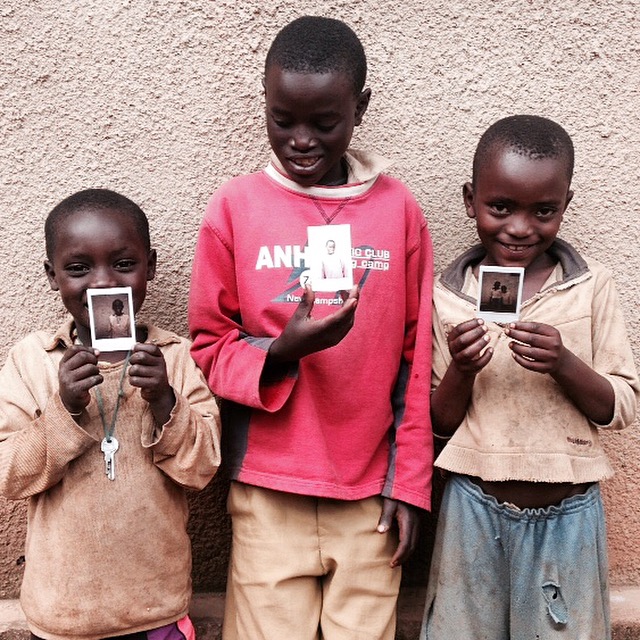
Kigali, Rwanda. July, 2005. Photo: Kresta King CutcherTo my knowledge, they found me through Flickr - all except Orphans of Rwanda and the Pearl Children Care Centre, whom I contacted myself to share my photographs. An orphan from the Gisimba Memorial Centre (Alex, who now lives in Minnesota) discovered my photographs on Flickr about a year ago. We’ve since developed a close friendship, and have collaborated on several presentations about the orphanage where he grew up. Before my second trip to Rwanda in June of this year, Alex insisted that I contact Amon, the founder of Living Faith Ministries. He too, has also become a close friend.

Photos: Kresta King Cutcher

Technorati aids in africa, digital storytelling, kresta king cutcher, net2, npflickr, rwanda